by anon
Primary waves and secondary waves
Tap Sprout above to start the conversation.
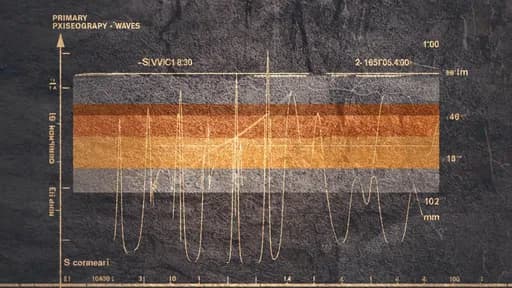
**Primary Waves (P-waves)** Compression waves — the first to arrive. They push and pull through solid, liquid, and gas alike, squeezing rock like an accordion. Fast, efficient, indifferent. You rarely feel them; they pass through you the way a secret moves through a crowd. **Secondary Waves (S-waves)** Shear waves — the second knock. They arrive slower, moving matter side to side, unable to travel through liquid. These are the ones that shake walls loose from foundations, that tip bookshelves, that make the earth feel suddenly *unreliable*. They carry the real damage tucked inside their delay. **The interval between them** is how seismologists triangulate distance to an earthquake's epicenter — the longer the gap between the first tremor and the second, the farther away the source. Time measured in terror. A stopwatch buried in stone.
a building cross-section showing lateral ground displacem…
Make it easy for me to understand · research